After an incredible week skiing in La Plagne, France, I had the chance to test out three different types of ski outfits to see which performed best in various conditions. From a vintage full-body ski suit to a modern layering system, each outfit had its strengths and weaknesses. Here’s how they stacked up.
1. The Vintage Colmar All-in-One Ski Suit
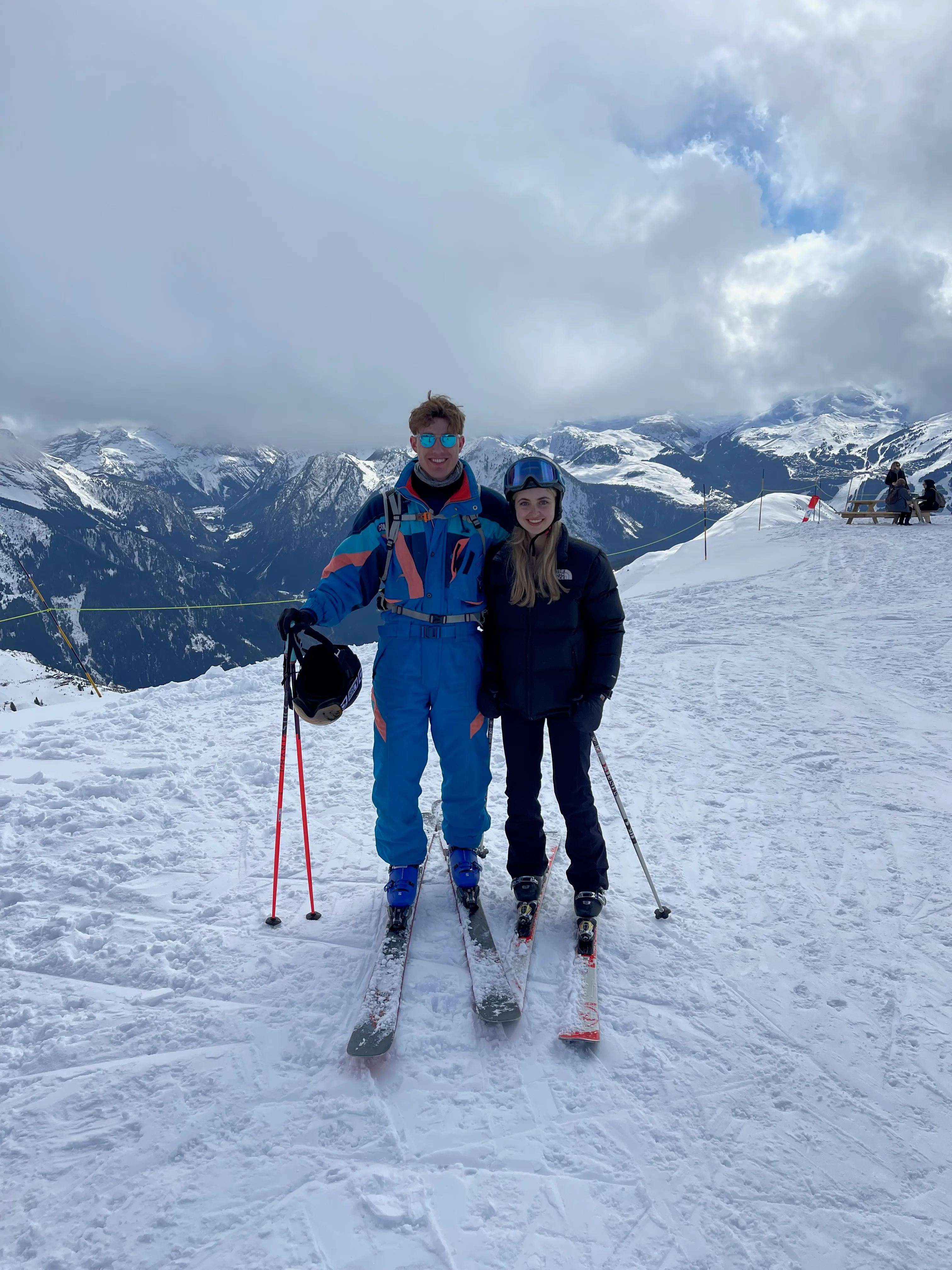
If you want to stay warm without piling on the layers, an all-in-one ski suit is a fantastic choice. I found that the vintage Colmar ski suit kept me exceptionally warm, thanks to the fact that all the heat was trapped within the suit. Unlike separate layers, there were no gaps for cold air to sneak in, which meant I could wear minimal base layers underneath and still feel toasty.
Another huge plus was the style factor. This ski suit turned heads, and I got plenty of compliments on the mountain. There’s something undeniably cool about rocking a retro outfit, and it definitely made me stand out from the sea of modern technical gear.
Functionally, the suit also had a lot to offer. It came with plenty of useful pockets, making it easy to stash my lift pass, snacks, and other essentials without needing an extra bag.
Pros: Super warm with minimal layers required. Stylish and attention-grabbing. Plenty of pockets for storage.
Cons: Limited versatility for changing weather conditions. Can be slightly bulky compared to a layering system.
2. Down Jacket and Hard Shell Combo (Arc’teryx Cerium Down and Arc’teryx Gore-Tex Hard Shell)
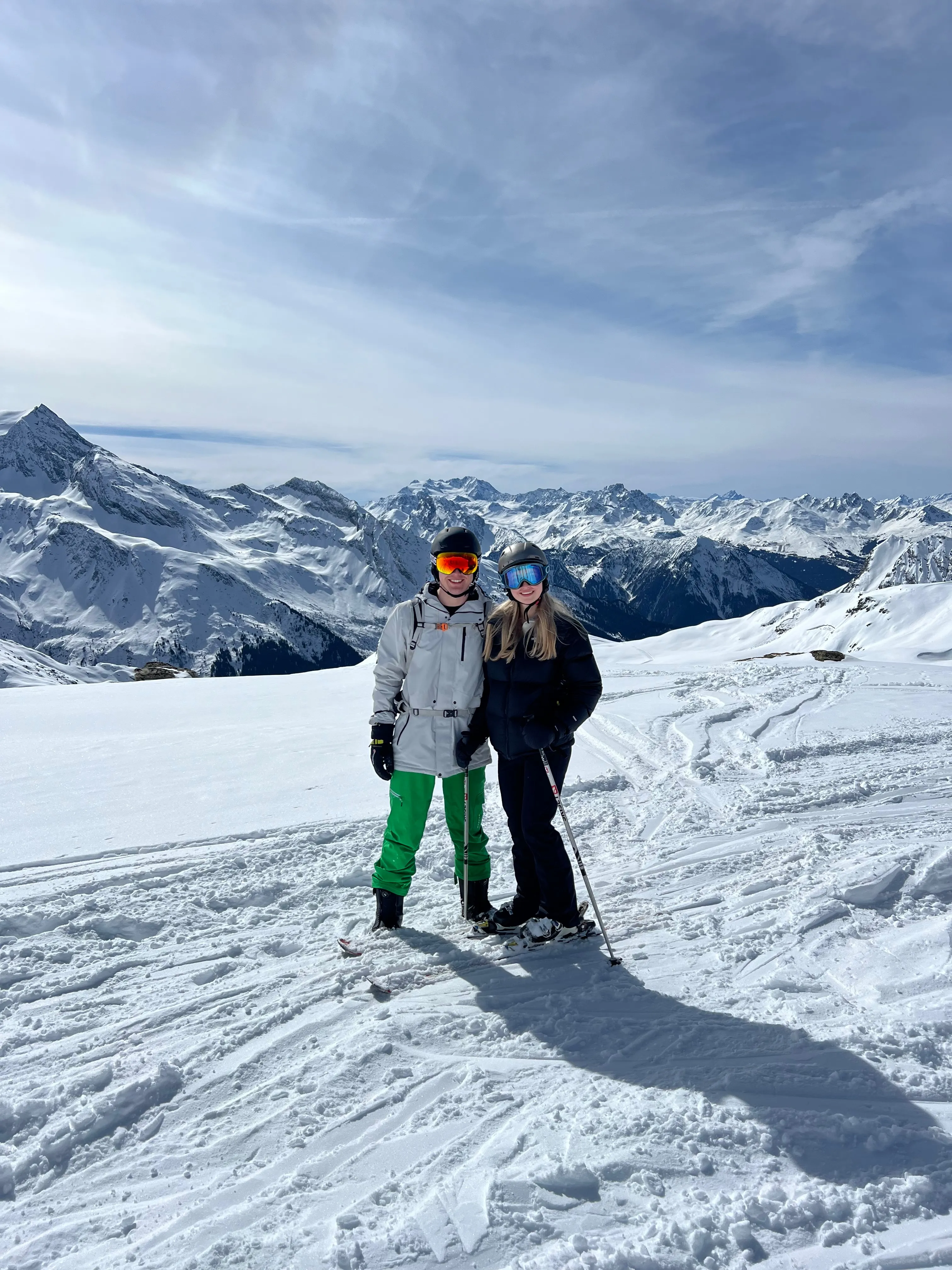
For a more modern approach, I tested a layering system consisting of an Arc’teryx Cerium down jacket paired with an Arc’teryx Gore-Tex hard shell. This setup provided excellent warmth while also offering superior waterproofing, which was invaluable when skiing in slushy snow or deep powder.
One of the biggest advantages of this setup was its flexibility. On warmer days, I could wear just the shell to ski without overheating. If I was off the slopes and not expecting any snow contact, I could wear just the down jacket for a lightweight, cosy option. This versatility made it one of my favourite choices for changing conditions.
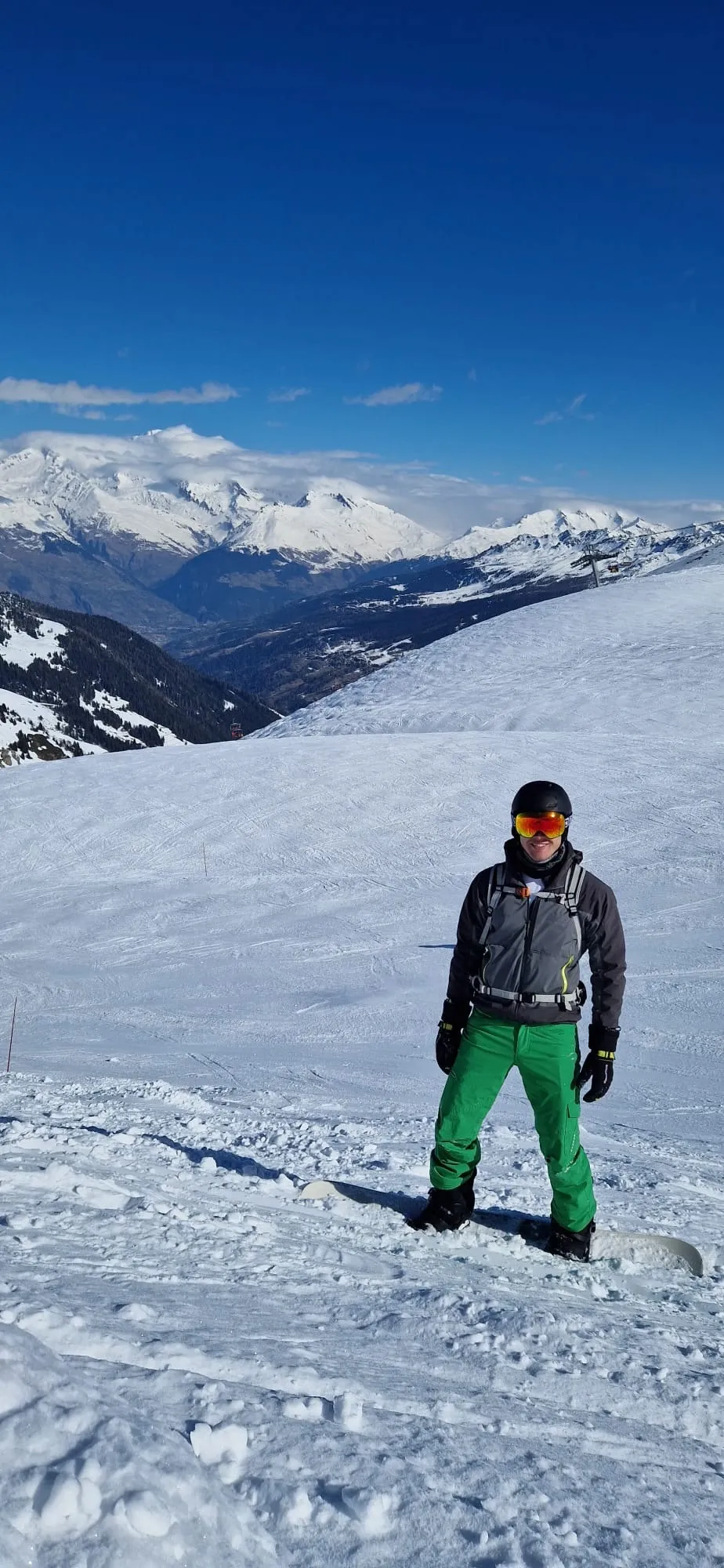
The downside? While the fitted nature of this outfit made it excellent for skiing fast and carving down the mountain, the slightly shorter length of the jackets meant it wasn’t the best option for snowboarding, where I found myself sitting in the snow often.
Pros: Excellent waterproofing and warmth. Great flexibility for different conditions. More fitted and streamlined for high-speed skiing.
Cons: Shorter cut made it less ideal for snowboarding.
3. Classic Ski Jacket (Mountain Warehouse)
For a more traditional approach, I tested a high-quality Mountain Warehouse ski jacket. This was a solid, all-around performer that worked particularly well for snowboarding. The longer body length was a major advantage when sitting down frequently, as it meant I could sit on the back of the jacket for added insulation.
While it wasn’t as warm as the full ski suit or as waterproof as the down-and-shell combo, it provided a great middle ground. It was warm enough with proper layering, and it didn’t feel overly bulky or restrictive.
Pros: Ideal for snowboarding due to longer body length. Good balance of warmth and flexibility. Reliable for standard skiing conditions.
Cons: Not as warm as the ski suit. Less waterproof than a dedicated hard shell layer.
Final Verdict: Which Setup is Best?
- Best for warmth and style: The vintage Colmar ski suit
- Best for versatility and waterproofing: The down jacket and hard shell combo
- Best for snowboarding comfort: The classic ski jacket
Ultimately, each of these outfits had its own advantages depending on the conditions and the type of skiing or snowboarding I was doing. If I had to pick just one setup, the down jacket and hard shell combo offered the best overall performance due to its adaptability. But for those ultra-cold days or if you want to make a statement, the all-in-one ski suit is unbeatable.
Written by Euan